Research Areas
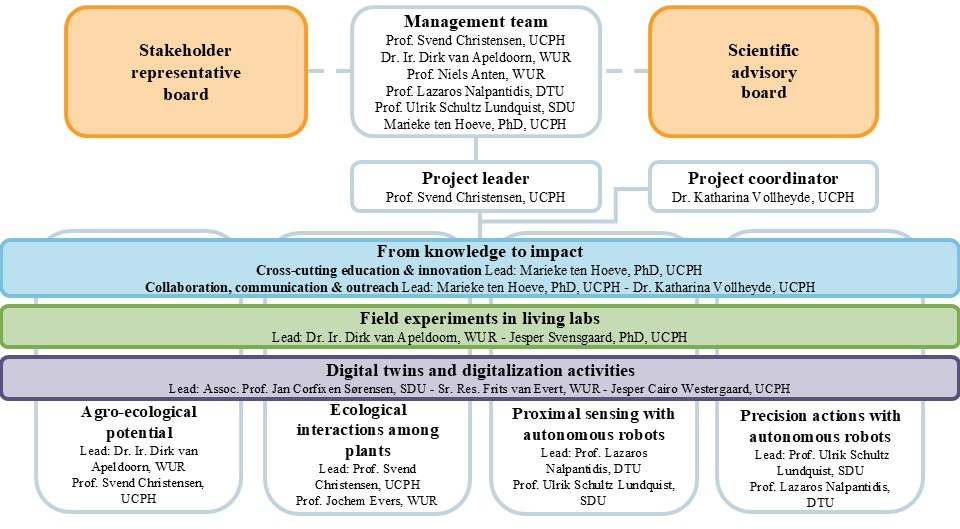
RIC is structured into four interconnected research areas:
Area 1: Agro-ecological potential
Area 2: Ecological interactions among plants
Area 3: Proximal sensing with autonomous robots
Area 4: Precision actions with autonomous robots
Cross-Cutting Themes
The four research areas are connected through three cross-cutting themes:
(1) Field Experiments in living labs: RIC researchers and partners come together to co-design solutions and share insights.
(2) Digital twins and digitalization activities: RIC develops digital representations and models using input from all research areas.
(3) From knowledge to impact: RIC transforms research results into societal impact through education, innovation, collaboration, communication and outreach activities.
Management Team
RIC´s management team ensures alignment across activities and partners.
Scientific Advisory Board
RIC´s scientific advisory board provides independent guidance to support the scientific excellence of RIC.
Stakeholder Representative Board
RIC has two stakeholder representative boards: one in Denmark and one in the Netherlands. Through both, RIC remains in close dialogue with the communities outside the project: farmers, technology developers, industrial scale-ups, and policymakers.